Best Wood Species for Dining Tables: A Designer's Guide
Choosing the right wood species is the single most important decision when commissioning a custom dining table. It determines the color, texture, durability, and personality of the finished piece. This guide breaks down the top options so you can choose with confidence.
Key Takeaway: For most dining tables, the top four picks are black walnut (warmth and character), white oak (versatility and durability), hard maple (scratch resistance and clean aesthetics), and cherry (timeless patina development). The best choice depends on your design style, daily use, and budget.
How to Choose the Right Wood
The right wood species for your dining table depends on several factors, and understanding them will make the decision much easier. Hardness, measured by the Janka scale, tells you how well a wood resists dents and scratches from daily use. Woods above 1,000 Janka are generally well-suited for dining tables. Grain pattern affects the visual texture of the surface: some species like ash and oak have bold, prominent grain, while maple and cherry are smoother and more subtle.
Color is often the starting point for most clients. Darker woods like walnut create a warm, dramatic feel, while lighter woods like maple and ash open up a room. Maintenance requirements vary too: harder woods need less attention over time, while softer species may develop character marks that some owners love and others prefer to avoid. Finally, budget matters. Domestic hardwoods like ash and oak offer exceptional value, while walnut and cherry carry a premium for their distinctive aesthetics.
The Top 6 Wood Species for Dining Tables
These are the species we build with most frequently at Coastal Custom Woodworks. Each one has distinct strengths, and the right choice depends on your space, style, and how the table will be used.
Black Walnut
Janka: 1,010 lbf|Price: $$$Black walnut is the most requested species at Coastal Custom Woodworks, and for good reason. Its rich, dark chocolate-brown tones with subtle purple undertones create an immediate sense of warmth and sophistication. Walnut is moderately hard at 1,010 on the Janka scale, making it durable enough for daily dining while still being workable enough for intricate joinery and live-edge designs. Over time, walnut develops a beautiful patina that only enhances its character. It pairs exceptionally well with metal bases and mid-century-inspired legs.
Hard Maple
Janka: 1,450 lbf|Price: $$Hard maple is a powerhouse of durability. At 1,450 on the Janka scale, it is one of the hardest domestic species available, which means it resists scratches and dents better than almost any other option on this list. Its light, creamy-white color brings an airy, clean aesthetic that works beautifully in bright, modern kitchens and Scandinavian-inspired dining rooms. Maple takes stain well if you want a different tone, but its natural color is stunning on its own. It is an excellent mid-price option that does not sacrifice quality.
White Oak
Janka: 1,360 lbf|Price: $$White oak is the most popular wood species in America for furniture, and its versatility explains why. With golden honey tones and a prominent grain pattern that adds visual depth without overwhelming a space, white oak works in virtually any design style. At 1,360 Janka, it is hard, durable, and highly resistant to moisture. White oak is the go-to choice for farmhouse tables, craftsman-style builds, and transitional interiors where the table needs to bridge classic and contemporary elements.
Cherry
Janka: 950 lbf|Price: $$$Cherry is the wood that ages most dramatically and beautifully. It starts as a light pinkish-brown and deepens into a rich, warm reddish-brown over months and years, a process woodworkers call developing a patina. At 950 Janka, cherry is softer than maple or oak, so it will show wear more readily. But many owners consider that character, not damage. Cherry is the classic choice for traditional and colonial-style dining rooms and is prized by collectors and antique lovers. Every cherry table tells the story of time spent around it.
Ash
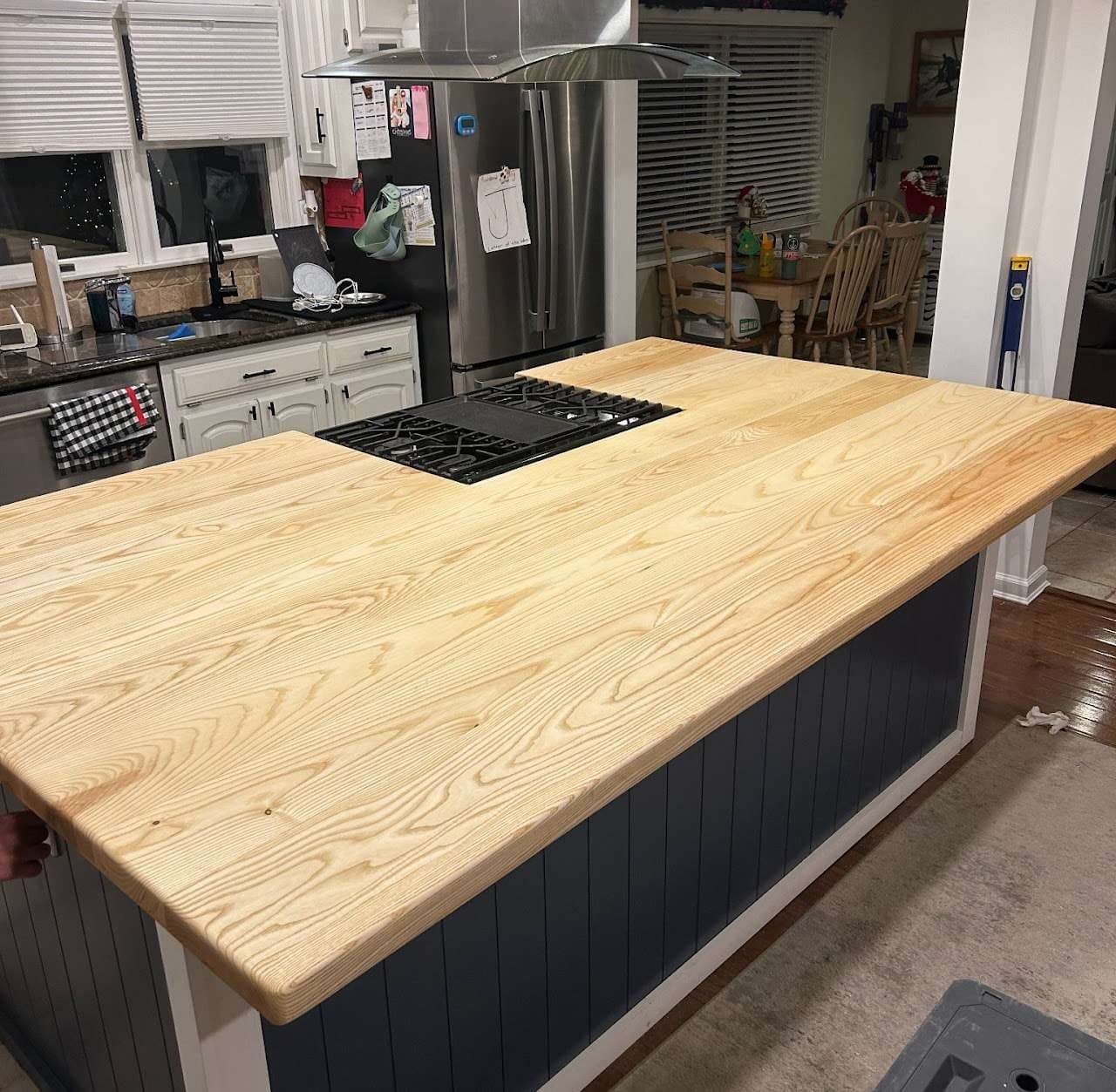
Janka: 1,320 lbf|Price: $Ash is one of the most underrated species for dining tables. With a bold, dramatic grain pattern that adds texture and movement, ash delivers visual interest that rivals walnut at a significantly lower price point. At 1,320 Janka, it is hard and shock-resistant, which is why it has historically been used for tool handles and baseball bats. Its light blonde color pairs well with industrial metal bases and works beautifully in modern and Scandinavian-inspired spaces. If you want a striking table without the premium price tag, ash deserves serious consideration.
Live Edge Slabs
Janka: Varies by species|Price: $$$+A live edge slab is not a species but a cut: one or both edges of the tabletop retain the natural contour of the tree, bark and all. The result is a one-of-a-kind piece where no two tables are ever identical. Live edge slabs are most commonly sourced from walnut, maple, or ash, each bringing its own color and grain character. These tables command premium pricing because the slabs must be carefully selected, dried, flattened, and finished, a process that can take months before building even begins. For designers and homeowners looking for a true statement piece, nothing matches the presence of a live edge dining table.
Wood Species Comparison
| Species | Janka Hardness | Color | Grain Pattern | Price Range | Best Style |
|---|---|---|---|---|---|
| Black Walnut | 1,010 | Dark brown | Flowing, open | $$$ | Modern, mid-century |
| Hard Maple | 1,450 | Creamy white | Fine, subtle | $$ | Scandinavian, minimalist |
| White Oak | 1,360 | Golden honey | Prominent, cathedral | $$ | Farmhouse, craftsman |
| Cherry | 950 | Reddish-brown | Fine, smooth | $$$ | Traditional, colonial |
| Ash | 1,320 | Light blonde | Bold, dramatic | $ | Modern, industrial |
| Live Edge | Varies | Varies | Natural edge | $$$+ | Statement, organic |
What About Exotic Woods?
Species like purpleheart, wenge, teak, and mahogany are available and can produce stunning results. Purpleheart brings a vibrant violet tone, wenge offers deep espresso-black color, teak is legendary for its water resistance, and mahogany provides classic reddish warmth. However, exotic woods come at premium pricing due to sourcing complexity and material costs. Most of our clients choose domestic hardwoods for their dining tables because they offer exceptional beauty and durability at a better value. If an exotic species speaks to you, we are happy to source it and provide a quote.
Our Recommendation
If you want warmth and character, go with walnut. If you want versatility that works with any decor style now and in ten years, white oak is the safest bet. If durability and scratch resistance are the top priority (especially with young kids), hard maple is the way to go. But honestly, the best wood for your dining table depends on your space, your style, and your budget. That is exactly what the design consultation is for: we look at your room, talk through how you use the table, and recommend the species that fits your life.
Ready to Choose Your Wood?
Browse our custom tables and furniture to see what we build, or if you are an interior designer, check out our trade program for priority scheduling, material samples, and designer pricing. When you are ready to talk about your project, request a free quote or call us directly at (516) 554-2734. We will help you find the perfect wood for your table.