How to Care for Your Live Edge Table: The Complete Guide
A live edge table is an investment. Proper care keeps it looking great for decades. Here is what to do (and what to avoid) from a woodworker who builds them.
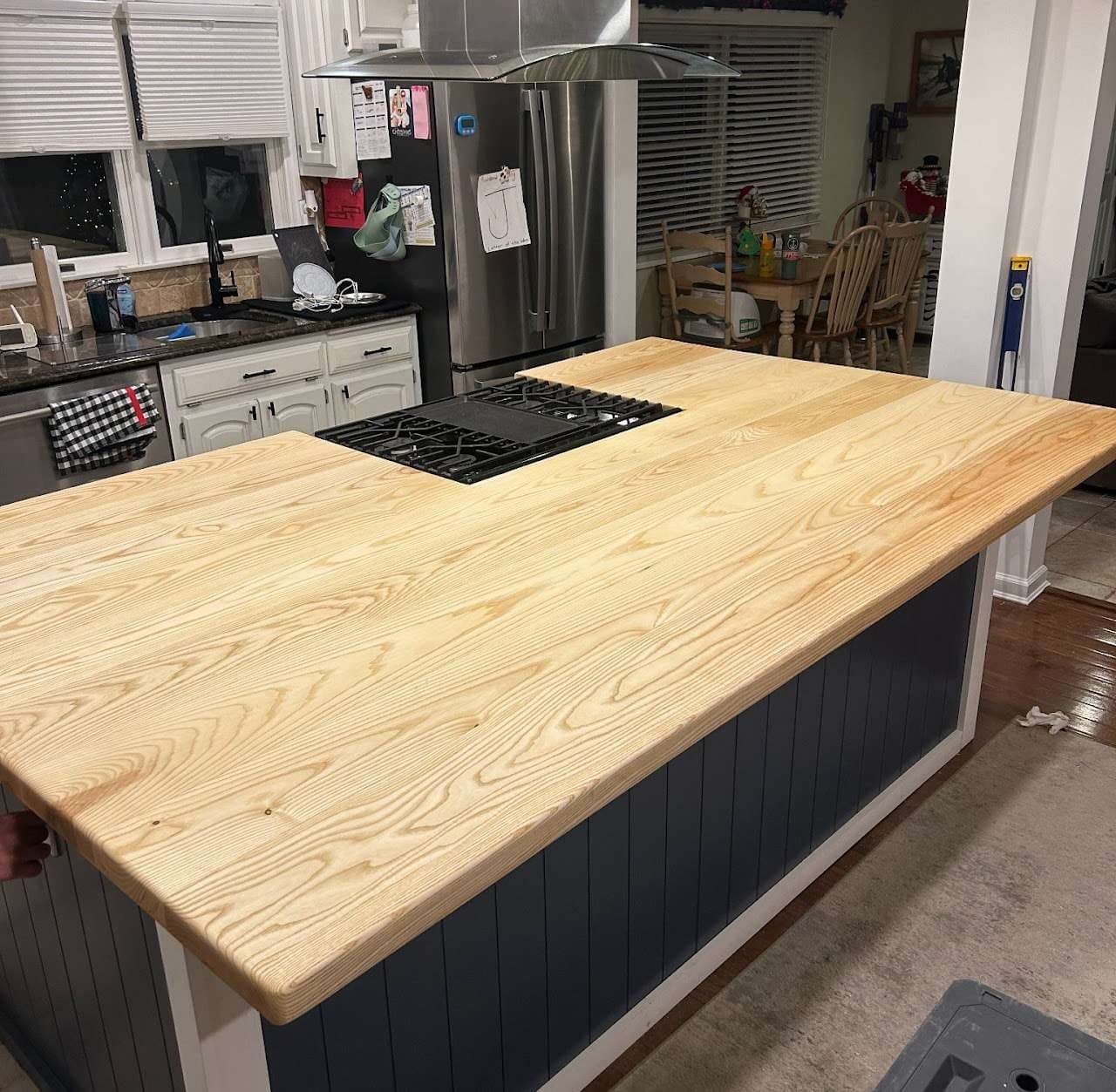
Quick answer: Clean daily with a damp cloth. Use trivets for hot items. Oil every 3-6 months (oil-finished tables only). Keep out of direct sunlight. Sand out scratches as they happen. A well-maintained live edge table can last 50 to 100+ years.
Live edge tables keep the natural contour of the tree along one or both edges. That organic shape, with all the curves, bark traces, and grain character, is what makes them special. Caring for a live edge table is not complicated, but it differs slightly from caring for a standard dining table because of the natural edge and the finish type. We are going to break it down into daily, quarterly, and as-needed maintenance so you can keep your table in great shape for years.
Know your finish first
Before doing anything, figure out what finish is on your table. This determines your entire care routine. There are two main categories:
- Oil finish (hardwax oil, tung oil, Danish oil). The oil soaks into the wood fibers rather than sitting on top. The surface feels natural and warm to the touch. Water will absorb into the surface if left sitting. Oil-finished tables need periodic re-oiling and are easier to spot-repair.
- Film finish (polyurethane, conversion varnish, lacquer). The finish creates a hard, protective layer on top of the wood. The surface feels smooth and slightly plasticky compared to oil. Water beads and sits on the surface. Film-finished tables do not need oiling but are harder to spot-repair if damaged.
If you are not sure which finish your table has, drip a tiny amount of water on an inconspicuous spot. If it absorbs within a minute, you have an oil finish. If it beads up and sits on the surface, you have a film finish.
Daily cleaning
Daily care is simple regardless of finish type. Wipe the table with a soft, damp cloth after meals. For stuck-on food, use warm water with a small amount of mild dish soap. Dry the surface immediately with a clean towel. The key word is "damp," not "wet." You never want standing water on a wood table, especially on an oil finish.
Things to avoid on any live edge table:
- Harsh chemicals (bleach, ammonia, all-purpose cleaners with solvents)
- Abrasive sponges or steel wool on the finished surface
- Silicone-based furniture sprays (they build up a film that interferes with future refinishing)
- Placing wet glasses directly on the surface without coasters
The natural edge area deserves extra attention. Dust and crumbs collect in the bark crevices and irregular contours. A soft brush (an old toothbrush works well) clears debris from hard-to-reach spots along the live edge.
Quarterly oil treatment (oil finishes only)
If your table has an oil finish, re-oiling every 3 to 6 months keeps the wood nourished and protected. Here is the process:
- Clean the table surface thoroughly and let it dry completely.
- Apply a thin, even coat of food-safe mineral oil or hardwax oil with a lint-free cloth. Work with the grain.
- Let the oil soak in for 15 to 30 minutes.
- Wipe off all excess oil with a clean, dry cloth. Any oil left sitting on the surface will feel sticky.
- Allow 4 to 6 hours before using the table. Overnight is even better.
How do you know when the table needs oil? The wood will look dry, lighter in color, and feel rough compared to when it was freshly oiled. Some people describe it as the wood looking "thirsty." Dining tables used daily typically need oiling closer to every 3 months. A table that sees lighter use can go 6 months between treatments.
Protecting against sunlight and temperature
Sunlight is the biggest enemy of a live edge table. UV exposure changes the color of wood over time. Walnut lightens and loses some of its dark richness. Cherry darkens dramatically. Oak shifts toward a golden amber. These color changes are natural and most people find them attractive. The problem arises when only part of the table is exposed to sunlight while the rest is in shadow, creating uneven fading.
To minimize uneven color changes:
- Keep the table out of direct, sustained sunlight. Near a window is fine if it has curtains or blinds that filter UV.
- Do not leave placemats, tablecloths, or decorative items in the same spot for weeks at a time. They create shadow lines.
- Rotate the table 180 degrees every few months if one end gets more light than the other.
- UV-filtering window film is an effective solution if the table sits in a sunny room.
Temperature and humidity matter too. Wood expands and contracts with changes in moisture content. Extreme dryness (common in Long Island homes during winter when the heat is running) can cause cracks in the slab. A humidifier in the room helps. Keep the relative humidity between 35% and 55% if possible.
Dealing with scratches and dents
Scratches happen. On an oil-finished table, fixing them is straightforward. Sand the scratched area lightly with 220-grit sandpaper, working with the grain direction. Wipe away dust with a tack cloth, then apply a coat of oil to the sanded area. Blend the oil into the surrounding surface so there is no visible line. The repair will be nearly invisible.
On a poly-finished table, light scratches can sometimes be buffed out with furniture polish or a paste wax. Deeper scratches may need touch-up with a matching finish, which is trickier to do invisibly. For significant damage to a film finish, professional refinishing of the affected area (or the whole top) may be the best route.
Small dents in an oil-finished table can sometimes be raised with steam. Place a damp cloth over the dent and press a warm (not screaming hot) iron on top for 10 to 15 seconds. The steam swells the compressed wood fibers back toward their original position. This does not work on cuts, only on dents where the fibers are compressed but not severed.
When to refinish
A well-maintained live edge table can go many years before it needs a full refinish. Oil-finished tables can often go 5 to 10 years between full refinishing if you keep up with quarterly oiling. Film-finished tables last even longer, often 10 to 15 years before the finish shows significant wear.
Signs that a full refinish is needed: the surface feels rough despite oiling, there are areas where the finish has worn through to bare wood, water stains are not coming out with spot treatment, or the overall appearance has become dull and patchy.
Refinishing a live edge table is a job for a professional. The natural edge requires careful sanding to avoid changing its profile, and the finish needs to be applied evenly across both the flat surface and the irregular edge. If your table needs refinishing, we handle that at our shop in Babylon. Give us a call at (516) 554-2734.
Products we recommend
For oil-finished live edge tables, these products work well:
- Osmo Polyx Oil: A hardwax oil that is easy to apply and gives a natural look with good protection. Widely used by professional woodworkers.
- Howard Butcher Block Conditioner: A food-safe mineral oil and wax blend. Affordable and effective for regular maintenance.
- Rubio Monocoat: A plant-based oil that bonds to wood in a single coat. Popular for its low-VOC formula and ease of application.
For film-finished tables, routine cleaning with a damp cloth is all you need. If you want extra protection, a paste wax applied once or twice a year adds a layer of defense against minor scratches.
Need a live edge table or refinishing?
We build custom live edge tables from walnut, maple, ash, and other hardwoods at our workshop in Babylon, NY. If you already own a live edge table that needs refinishing or repair, we do that too. Browse our custom tables and furniture page, check out the gallery, or get in touch for a free quote.
Live Edge Table Care FAQ
For tables with an oil finish, apply a fresh coat of furniture oil or hardwax oil every 3 to 6 months, depending on use. Tables in heavy daily use need oiling more often. Tables with a polyurethane or conversion varnish topcoat do not need oiling at all since the finish seals the surface.